
The Seto Inland Sea of Japan is home to a unique and deeply contemplative cultural project: the Benesse Art Site Naoshima. Spanning the islands of Naoshima, Teshima, and Inujima, this ambitious endeavor has transformed once-depleted fishing and industrial communities into a world-renowned destination where art, architecture, and nature exist in profound harmony.
Installations on the Islands
The art across the islands is overwhelmingly site-specific, meaning it was created with the particular location and history of the island in mind.
Naoshima Highlights
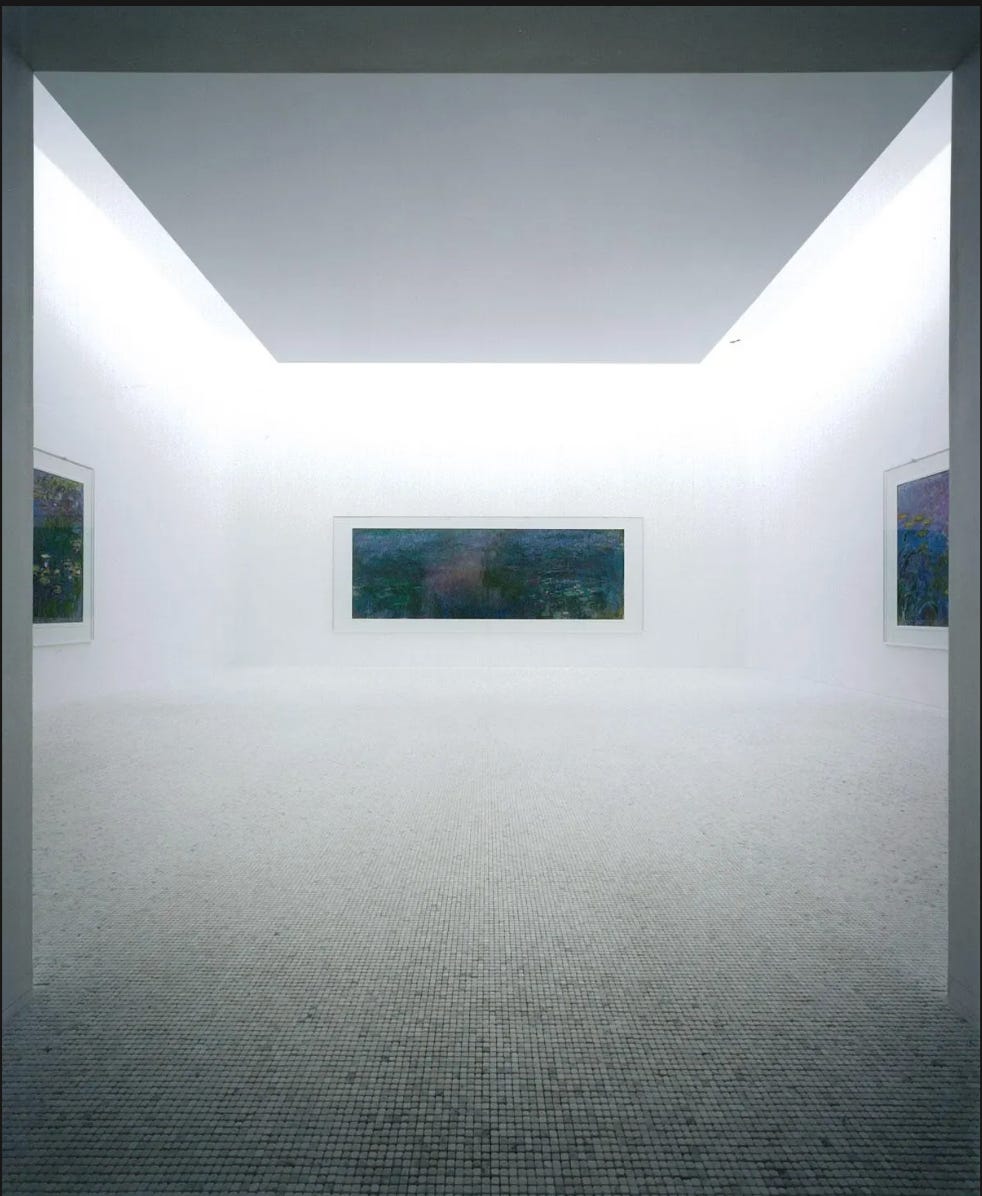
The Chichu Art Museum, designed mostly underground to avoid disturbing the scenic view, features works by Claude Monet, James Turrell, and Walter De Maria. The experience of seeing Monet’s famous Water Lilies paintings is deeply sensory: before entering the gallery, visitors are asked to remove their shoes and socks. You then walk into the room on a floor composed of millions of tiny, square marble tiles, which gives the tactile sensation of stepping onto the uneven, organic ground of a garden path. This connection, combined with the pure natural light falling onto the masterpieces, creates an incredibly intimate connection, almost as if you have been transported directly into Monet’s garden at Giverny.
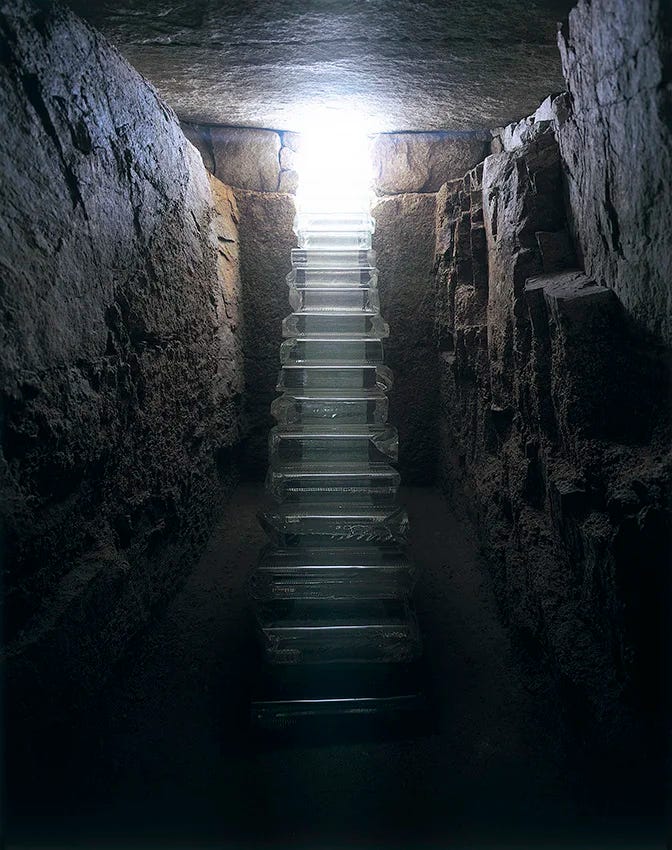
In the historic Honmura district, the Art House Project converted abandoned traditional homes and temples into permanent, immersive artworks, featuring installations by artists like James Turrell and Hiroshi Sugimoto.
Hiroshi Sugimoto’s glass staircase links a Shinto shrine to an underground chamber at Go’o Shrine.
Teshima Highlights
The Teshima Art Museum, an architectural marvel by Ryue Nishizawa and artist Rei Naito, is shaped like a drop of water. Inside the vast, shell-like space, water droplets mysteriously emerge from the floor, creating a constantly moving, disorienting, and meditative experience.
The Les Archives du Cœur (The Heart Archives) by Christian Boltanski is one of the island’s most personal and moving sites. This installation archives heartbeats from around the world. Before entering the archives, visitors can read brief histories of the recorded individuals, allowing them to choose a personal story to connect with. The heartbeats are not just heard, but seen: a single lightbulb hangs in the room, flashing in synchronization with the rhythm of the chosen heart. This powerful, intimate sensory experience—such as listening to the steady beat of a retired nurse and mother of two—creates a profound feeling of human intimacy with a complete stranger, a moment so moving that many visitors are brought to tears.
A renovation of an old private house gave rise to the Teshima Yokoo House, a collaboration between artist Tadanori Yokoo and architect Yuko Nagayama. The site, which includes a Main House, a Warehouse, and a cylindrical Outhouse installation, is a philosophical zone dedicated to exploring the theme of “life and death.” Nagayama incorporated tinted red glass into the architecture—a reference to Yokoo’s art and the color of blood symbolizing life—which filters the natural light and transforms the surrounding scenery and the artwork itself into a series of visually rich, interconnected collages.


Travel and the Philosophy of Non-Disturbance
The islands are primarily accessed by ferry from the mainland ports of Takamatsu (Shikoku) and Uno Port (Okayama Prefecture). Due to the scattering of art sites, inter-island high-speed passenger boats are essential for travel between Naoshima, Teshima, and Inujima, requiring visitors to carefully plan their routes around the less frequent ferry timetables.
The entire Benesse Art Site project is rooted in a deep respect for the islands’ nature, history, and community, adhering to a philosophy of non-imposition:
Subterranean Architecture: Structures like the Chichu Art Museum are built largely underground to preserve the Seto Inland Sea’s natural panorama.
Getting Around: To minimize noise, pollution, and traffic, visitors are strongly encouraged to use the island’s limited public buses, walk, or rent electric bicycles to navigate the winding roads. This enforced slower pace encourages a deeper, more mindful engagement with the environment.
Day Trips and Quiet Evenings: The limited accommodation capacity means that most visitors are expected to leave on the last ferry of the day. This regulation ensures that the islands, once bustling with tourists, return to a state of quiet equilibrium with the sunset, allowing the peaceful life of the local residents to continue undisturbed by mass tourism.
History and the Visionary Founder: Reversing the Decline
The project began with a shared dream in 1985 between Tetsuhiko Fukutake, the founder of Fukutake Publishing (now Benesse Holdings, Inc.), and Chikatsugu Miyake, the mayor of Naoshima Town.
The need for revitalization was urgent. Like many remote Japanese islands in the late 20th century, Naoshima, Teshima, and Inujima had suffered severe economic decline. As traditional industries vanished and no new jobs emerged, young people left in droves, seeking opportunities in larger cities. This demographic shift led to the islands becoming increasingly depopulated and aging—a phenomenon often tragically described as “god’s waiting room.” Mayor Miyake envisioned a cultural tourism hub as a lifeline, while Fukutake dreamed of a place where youth from around the world could gather and contemplate nature.
Tetsuhiko Fukutake’s son, Soichiro Fukutake, inherited the mantle and pushed the vision forward after his father’s passing. The first tangible step was the Naoshima International Camp in 1989, followed by the opening of the Benesse House Museum in 1992, a hotel and museum designed by the renowned architect Tadao Ando. The entire project is a realization of the philosophy of Benesse (Well-Being), striving for a “coexistence of nature, art, and architecture,” and seeking a mutual, regenerative relationship between the land, the islanders, and contemporary art to reverse the depopulation trend.
Conclusion: Art, Life, and the Seto Sea
Benesse Art Site Naoshima and Teshima transcend the definition of a traditional museum. The carefully curated experiences, from walking barefoot towards Monet’s Water Lilies to witnessing the vulnerability of a stranger’s heartbeat at Les Archives du Cœur, are designed to engage all senses and provoke deep personal reflection. This dedication to site-specific art integrated into the landscape forces visitors to question the very nature of art and how it should be displayed and experienced.
More than just a collection of galleries, the project is a testament to the power of art to regenerate a marginalized community and foster a dialogue between man, land, and culture. For those seeking a unique journey through Japan—one that is contemplative, moving, and transformative—the Seto Inland Sea islands are often the first and most essential recommendation that comes to mind. They offer not merely a viewing of art, but an unforgettable participation in a living, breathing, artistic ecology.